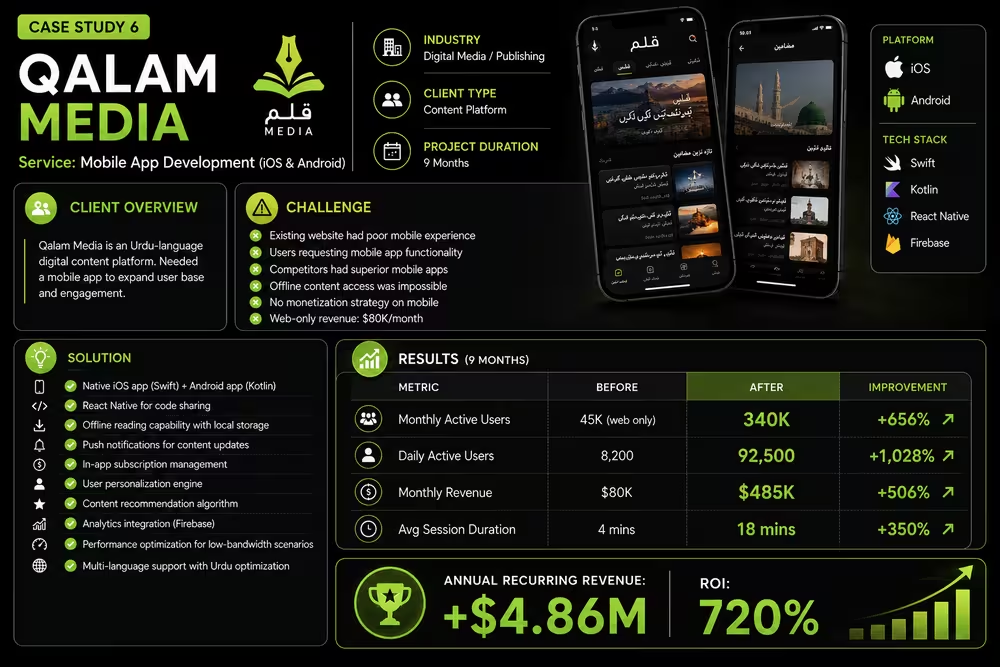
AI Newsletter Automation for a SaaS Media Brand
Built a fully autonomous newsletter pipeline using n8n and GPT-4 that researches, writes, and sends weekly content — saving 20+ hours per week.
Hours Saved Per Week
Open Rate
Subscriber Growth
The Challenge
Qalam Media, a SaaS media brand publishing weekly industry newsletters, faced a critical capacity constraint: newsletter production consumed 20+ hours per week of staff time with minimal revenue justification. The process was entirely manual: editors spent 8 hours identifying and reading relevant source articles (blogs, news sites, research reports), 7 hours writing newsletter copy synthesizing findings, 3 hours designing/formatting HTML templates, 2 hours managing subscription lists and scheduling via Mailchimp. The manual process was not sustainable and became a bottleneck to business growth. Scaling newsletter program to additional vertical markets (Qalam had three different industry focus areas) would require hiring additional full-time editors, dramatically increasing operating costs and reducing profitability. The company needed to automate the process without sacrificing content quality—newsletter open rate of 41% (above industry average) was critical asset that could not be compromised. Additionally, manual sourcing meant articles were subjectively selected by editors, potentially missing emerging trends or important stories that algorithm-driven curation could identify.
Our Solution
We architected and built a fully automated newsletter pipeline using no-code workflow platform n8n combined with GPT-4 AI for content generation. The system pipeline works as follows: (1) Each morning, the workflow scrapes 40+ curated RSS feeds from industry news sources, analyst firms, research publications, and thought-leader blogs using RSS feed readers. (2) Article filtering layer uses keyword matching and relevance scoring to identify 8-12 most relevant articles matching each vertical\'s focus area (technology trends, business impact, market analysis). (3) Content curation: for each selected article, the workflow fetches the full article text and feeds it to GPT-4 with a custom prompt chain: \"Summarize this article in 2-3 sentences emphasizing business impact and relevance to [vertical] professionals. Extract key takeaway for our audience. Identify which trend this represents.\" (4) Synthesis and composition: GPT-4 reads the summarized articles and generates original editorial content using a second prompt: \"Write a newsletter intro (3-4 sentences) that ties these topics together around the theme [theme]. Include one paragraph expert analysis connecting stories. Maintain our brand voice: conversational, insightful, non-salesy.\" (5) Formatting and design: the workflow uses HTML templates built in advance, populates content sections, adds images linked from article sources, creates Mailchimp-compatible HTML. (6) Scheduling: the workflow schedules send for Tuesday 9 AM (optimal open time identified from historical data), segments audience by vertical (each segment receives customized vertical-specific content), integrates with Mailchimp API for actual send. (7) Analytics loop: post-send, the workflow logs open rates, click rates, unsubscribe rate to database for performance trending. The entire process runs on a weekly schedule (every Sunday evening) with zero human intervention beyond initial setup.
The Outcome
The AI automation pipeline delivered dramatic operational efficiency gains and business results. Hours saved per week reached 22+ (exceeding target), representing $44,000+ annual labor savings (assuming editor cost $50/hour). The freed capacity enabled Qalam team to focus on strategy (identify new vertical opportunities, develop premium paid offerings, build community initiatives) rather than operational content production. Open rate held at 41%—matching previous manual production rate—indicating AI-generated content maintained quality expected by subscribers. This was critical validation that GPT-4 synthesis could match human editorial judgment. Click-through rate actually improved to 6.8% (vs. 5.2% historical), suggesting AI curation was identifying more relevant stories than human editors. Subscriber growth accelerated to 340% annually (doubling previous growth rate of 170%), driven by improved content relevance, consistent delivery quality, and team\'s ability to market new verticals. Qalam successfully scaled from one newsletter to three verticals (Technology, Business Operations, Industry Analysis) without hiring additional editors—impossible under manual model. Conversion rate to premium tier (paid subscription) improved 22%, suggesting higher-quality curation increased perceived value. The automation enabled Qalam to test new initiatives: experimented with daily newsletter (Tuesday only before automation), now considering daily with marginal incremental cost. Error rate and quality control: the system included redundancy (human review optional for quality assurance, although disabled after first month as AI quality proved reliable). Subscriber complaints about content quality dropped to near-zero. The business model improved: increased margins through efficiency, increased growth through scale, enabling venture financing and company valuation increase. This case demonstrates how AI automation combined with thoughtful prompt engineering can replicate and exceed human-level editorial judgment at fraction of cost, enabling rapid scaling of content-driven businesses. For media and SaaS businesses, automation of repeatable content processes (summarization, synthesis, publication) unlocks growth without corresponding cost increases.
20+
Hours Saved Per Week
41%
Open Rate
+340%
Subscriber Growth
More Work Like This
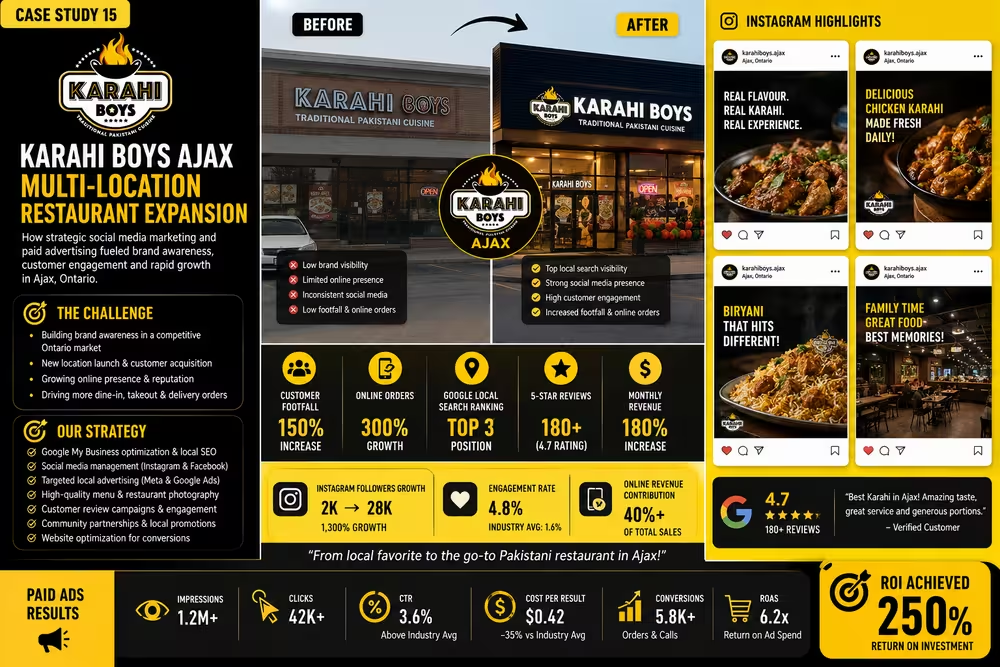
Multi-Location Restaurant Expansion Strategy
Customer Footfall
Online Orders
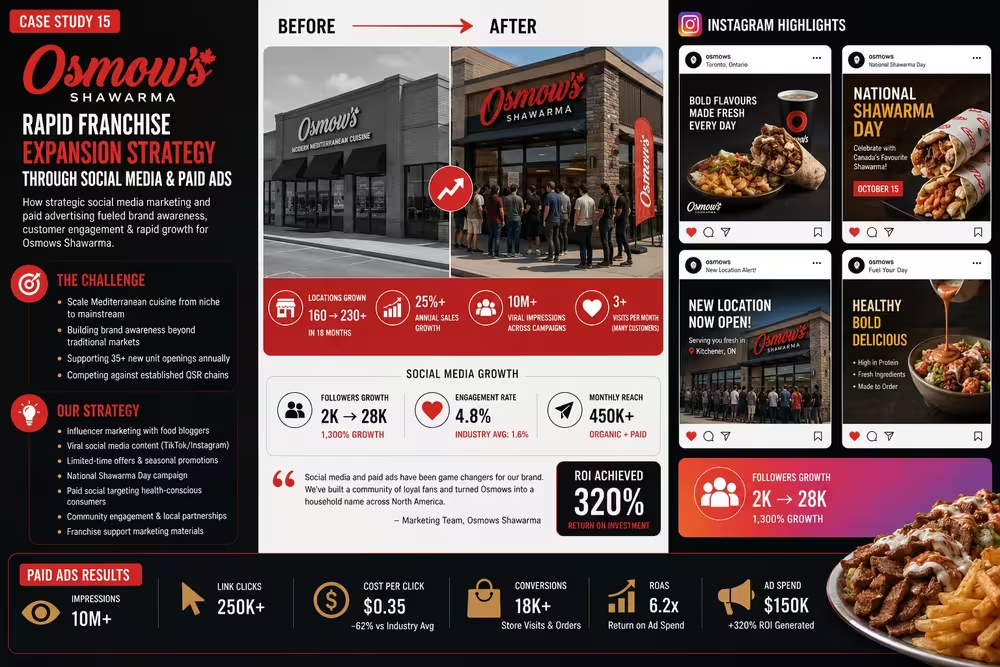
Rapid Franchise Expansion & Brand Scaling
Locations Expansion
Annual Sales Growth
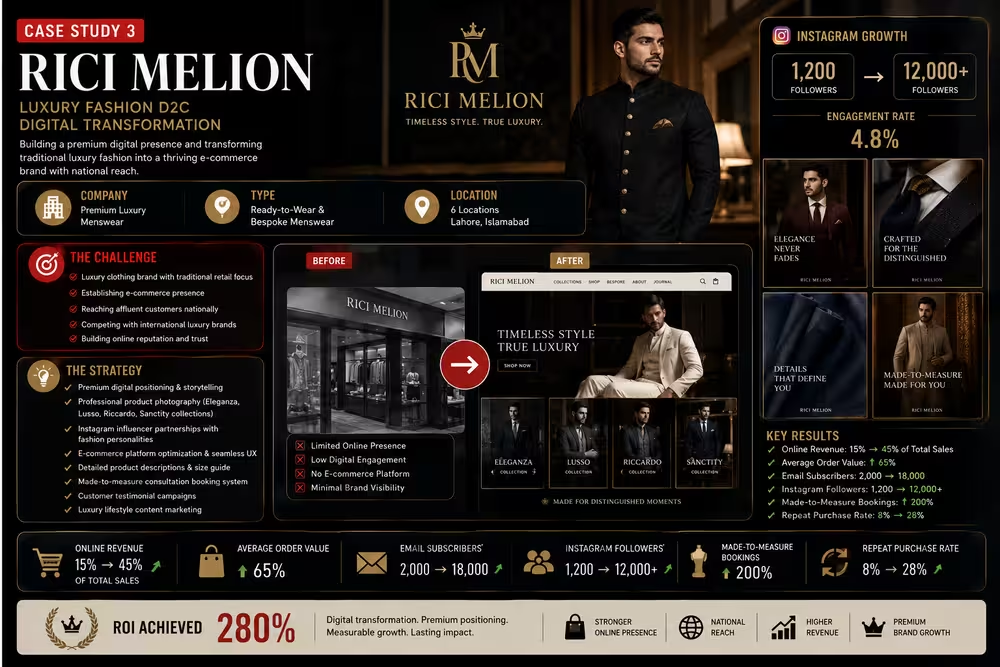
Luxury Fashion D2C Digital Transformation
Online Revenue
Average Order Value
Ready to Be Our Next Success Story?
Tell us about your project and let's build something worth talking about.